

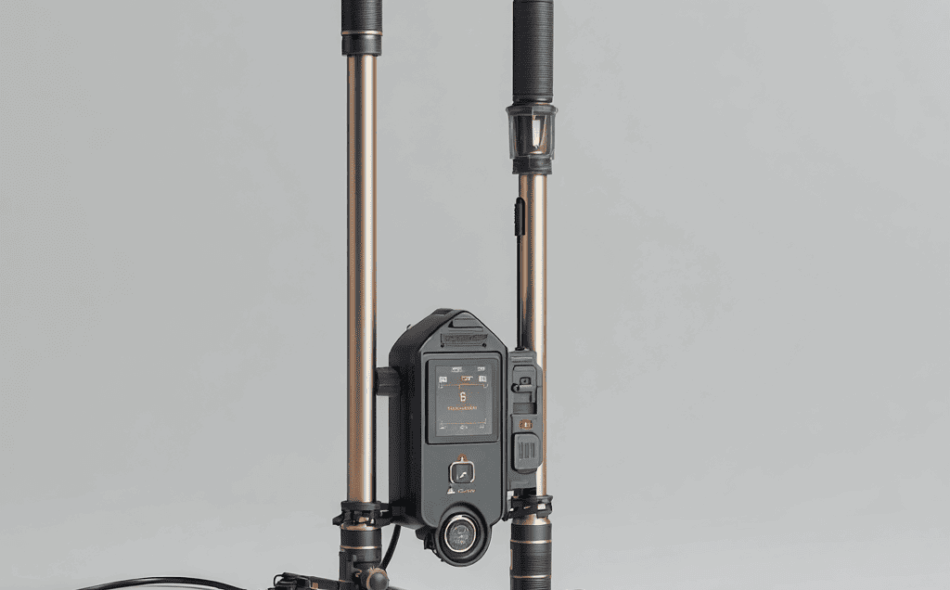
Time is the one resource that even the most dedicated prospector cannot replenish. Every hour in the field is precious, and how you spend those hours determines the difference between frustration and fulfillment. Traditional prospecting methods, while effective, are inherently slow. You walk, you swing, you listen, you dig. The process covers ground methodically, but vast territories remain unexplored simply because there aren’t enough hours in the day. This is where a long range gold detector changes everything. These remarkable instruments offer a strategic advantage that transforms how you approach the hunt, allowing you to survey massive areas efficiently, identify the most promising zones, and then focus your detailed searching exactly where it matters most.
The beauty of long range detection is not that it replaces traditional detectors, but that it works in perfect partnership with them. It is the strategic scout, the forward observer, the bird’s-eye view that reveals the battlefield before you ever set foot upon it. For the serious prospector, integrating this technology into your approach means covering more ground, finding more gold, and experiencing the deep satisfaction of hunting with intelligence and strategy.
The Fundamental Challenge: Vast Landscapes, Limited Time
 Gold is not distributed evenly across the landscape. It concentrates in specific geological settings—ancient riverbeds, fault lines, mineralized zones, and areas where natural processes have sorted and deposited heavy metals. The challenge is that these productive zones can be tiny islands in vast seas of barren ground. Searching for them with a traditional detector is like looking for a needle in a haystack by examining every straw individually. It works, eventually, but the time investment is monumental.
This reality discourages many potential prospectors. They look at a mountain range or a desert plain and feel overwhelmed. Where to start? Which direction to walk? Without intelligence, every choice is a gamble. Long range detection removes this uncertainty. It provides the strategic intelligence that allows you to approach vast territories with confidence and purpose.
How Long Range Detection Works: The Strategic Scout
Long range gold detectors operate on different principles than traditional induction balance detectors. Rather than requiring close proximity to a target, these instruments are designed to detect the “signal” or “signature” of specific metals—particularly gold—from considerable distances. Using technologies that may include ionic field detection, electromagnetic resonance, or other proprietary methods, they can scan across valleys, hillsides, and open plains, identifying areas that warrant closer investigation.
The user experience is distinctly different from traditional detecting. Instead of sweeping a coil low to the ground and listening for audio responses, the long range operator typically points the device in different directions, allowing it to analyze the distant landscape. When the instrument indicates a promising “hot spot,” that location is marked for future exploration. This process can survey an area that would take weeks or months to cover with a conventional detector in a matter of hours.
The Strategic Workflow: Scout, Then Hunt
Integrating a long range gold detector into your prospecting practice creates a powerful two-phase workflow that maximizes efficiency and success.
Phase One: Strategic Scanning
You arrive at a promising new area—perhaps a mountain range known for historical gold production, a desert basin with promising geology, or a vast ranch where you have received permission to search. Instead of immediately deploying your traditional detector and starting a slow, methodical grid, you first deploy your long range unit.
From elevated vantage points—ridges, hilltops, or even the back of a vehicle—you scan the landscape in all directions. The instrument processes the distant terrain, identifying signatures consistent with buried gold. You mark these locations on a GPS or map, noting their positions relative to geological features. Within a single morning, you may have identified half a dozen high-probability zones spread across miles of terrain.
Phase Two: Focused Prospecting
Now you deploy your traditional high-frequency gold detector. But instead of wandering aimlessly, you walk directly to the coordinates you identified during your scan. You arrive at a specific spot, on a specific hillside, with confidence that something is there. Your traditional detector, with its superior close-range sensitivity and discrimination, now goes to work pinpointing the exact location of the gold within that zone.
This workflow is transformative. You are no longer randomly searching; you are executing a strategic plan. Your time in the field is spent on high-probability targets, not on barren ground. The efficiency gains are dramatic, and the results speak for themselves.
Real-World Success Stories
Prospectors who have integrated long range detection into their practice report extraordinary results. One Australian gold hunter, frustrated after months of limited success with traditional methods, used a long range detector to scan a vast outback property. The instrument indicated a specific gully as a high-probability zone. Within hours of deploying his traditional detector in that gully, he uncovered a gold nugget weighing nearly half a kilogram—a find worth tens of thousands of dollars that had eluded him and others for years.
Another prospector in the American West used long range technology to identify ancient river channels buried under layers of volcanic ash. These paleochannels, invisible from the surface, had concentrated gold over millions of years. By pinpointing their locations from a distance, he was able to target his excavation efforts precisely, recovering nuggets that had been hidden for eons.
These stories are not anomalies; they are the natural result of applying strategic intelligence to the search for gold.
Complementing, Not Replacing
It is important to understand that a long range gold detector is not a replacement for a traditional detector. The two tools serve different purposes and excel in different phases of the hunt. The long range unit is your strategic scout, covering vast distances and identifying promising zones. The traditional detector is your tactical specialist, pinpointing exact locations within those zones and providing the detailed audio and visual feedback needed to recover targets efficiently.
Together, they form a complete prospecting system that is far more powerful than either tool alone. This synergy is the key to modern, efficient gold exploration.
Expanding Your Territory
Beyond efficiency, long range detection opens up entirely new categories of territory. Areas that were previously too large to search systematically become viable. Remote locations where logistics limit your time become accessible because you can survey them quickly. Even areas you have already hunted with traditional methods deserve a second look with a long range scanner—they may reveal deeper or more distant zones that were always just beyond your previous reach.
This expansion of territory is liberating. The prospector with a long range detector is not limited by the radius they can walk in a day. They are limited only by their curiosity, their research, and their willingness to explore.
Hunt Smarter, Find More
The quest for gold is a beautiful balance of science, intuition, and persistence. But persistence without strategy is simply hard work. A long range gold detector provides the strategic intelligence that transforms hard work into smart work, random searching into targeted discovery.
By covering more ground in less time, identifying high-probability zones with confidence, and then deploying your traditional detector for precise recovery, you maximize every hour in the field. The gold is out there, waiting in the vast landscapes of the world. A long range detector gives you the vision to see where it hides and the strategy to bring it home. Embrace the strategic advantage, and watch your discoveries multiply.